
|
Getting your Trinity Audio player ready...
|
On July 27, 2026, a video circulated showing an RCMP officer repeatedly punching Indigenous woman Rose Georgina Angus during an arrest on Makwa Sahgaiehcan First Nation. The Saskatchewan RCMP stated that Angus had assaulted two officers and resisted arrest, deeming the force used “reasonable” after an internal review. Angus was charged with assaulting police, resisting arrest, obstructing a peace officer and possession of cocaine. This incident, like many involving police use of force, will be legally determined by the courts. However, it has reignited public discussion about the relationship between Indigenous peoples and state authority.
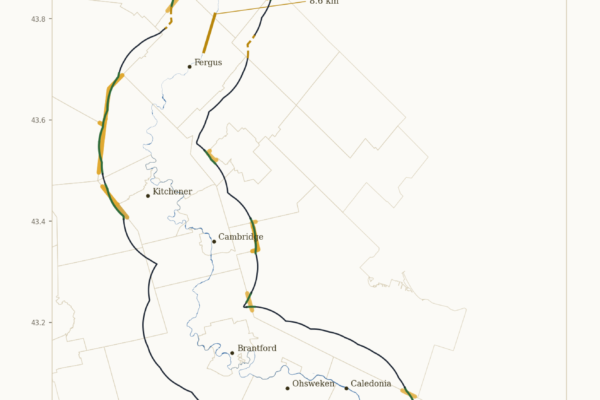
This event is not isolated but part of a longer institutional history including interventions at Six Nations of the Grand River (1922, 1924), the 1959 RCMP raid on the Ohsweken Council House, the 1990 Oka Crisis, the 1995 Gustafsen Lake standoff, the 2006 Caledonia reclamation, ongoing land disputes in Brantford and the Haldimand Tract, and the surveillance of Mohawk activists. A key distinction in the present era is Canada’s formal commitment to implementing the United Nations Declaration on the Rights of Indigenous Peoples (UNDRIP).
In the December 16, 2021 mandate letters issued to every federal minister, Prime Minister Justin Trudeau directed:
“Consequently I am directing every Minister to implement the United Nations Declaration on the Rights of Indigenous Peoples and to work in partnership with Indigenous Peoples to advance their rights.”
That instruction was not limited to the Minister of Public Safety or the RCMP. It was directed to every federal minister and, by extension, every department and agency under ministerial responsibility. Policing, corrections, taxation, justice, education, health care, natural resources, housing, social services, economic development, and every other area where the federal government exercises authority over Indigenous peoples now operates within that declared commitment.
Canada reinforced this commitment through the United Nations Declaration on the Rights of Indigenous Peoples Act (2021). This Act does not automatically invalidate existing laws but obligates the federal government, in consultation with Indigenous peoples, to align federal laws with UNDRIP principles and implement an action plan. True implementation is measured by institutional decisions, not just symbolic declarations.
Article 26 and the land question
Article 26 of the UN Declaration on the Rights of Indigenous Peoples (UNDRIP) affirms the right of Indigenous peoples to the lands and resources they have traditionally owned or acquired. It also grants them the right to own, use, develop, and control these resources, and mandates states to provide legal recognition and protection with respect for Indigenous customs and land tenure systems.
Beyond Article 26, UNDRIP includes other crucial provisions:
- Article 7: Protects the right to life, liberty, physical and mental integrity, and security of the person.
- Article 18: Affirms Indigenous peoples’ right to participate in decision-making through their chosen institutions.
- Article 19: Requires free, prior, and informed consent from governments before adopting measures affecting Indigenous peoples.
- Article 27: Calls for fair and transparent processes to recognize Indigenous rights related to lands and resources.
- Article 32: Requires consultation and cooperation before approving projects affecting Indigenous lands and resources.
- Article 37: Recognizes treaties and other constructive arrangements.
- Article 40: Guarantees access to fair procedures and effective remedies for disputes involving Indigenous rights.
Collectively, these articles form a comprehensive framework for how governments should interact with Indigenous peoples and lands.
Continuity of practice
The North-West Mounted Police, established in 1873 to extend Canadian authority, became the Royal Canadian Mounted Police in 1920. However, the relationship between police power and Indigenous governance at Six Nations of the Grand River predates the RCMP.
For generations, the Haudenosaunee Confederacy was an allied political entity with the British Crown. Mohawk warriors played vital roles in the American Revolutionary War and the War of 1812, helping preserve Britain’s North American colonies. In return, the Crown issued assurances, including Governor Haldimand’s 1779 pledge and the 1784 Haldimand Proclamation, granting lands along the Grand River for the “use and enjoyment” of the Mohawk and other Six Nations.
After Confederation in 1867, responsibility for “Indians and lands reserved for the Indians” shifted to the Dominion government. The alliance evolved into administration, with policies emphasizing assimilation and centralized management under the Department of Indian Affairs. By the early 1920s, officials viewed the traditional Confederacy Council as incompatible with Canada’s administrative model.
A common misconception is that the 1924 Order in Council dissolved the Haudenosaunee Confederacy government. It merely altered Canada’s administrative recognition. On October 7, 1924, an Indian Agent and RCMP officers entered the Council House at Ohsweken, announced Canada would only recognize the elected band council under the Indian Act, and seized wampum and records. The Confederacy persisted, but Canada enforced its administrative choice through state authority.

This pattern recurred in 1959 when RCMP officers removed hereditary chiefs’ supporters from the Council House, re-establishing control for the Canadian-recognized elected system.
Similar institutional dynamics appeared elsewhere:
- 1990 Oka Crisis: Police enforcement of injunctions escalated into a 78-day confrontation involving the Sûreté du Québec, RCMP, and Canadian Armed Forces.
- 1995 Gustafsen Lake: Internal RCMP recordings revealed a media officer stating, “smear campaigns are our specialty,” a phrase that has since been associated with police communications during Indigenous conflicts.
- 2006 Caledonia: The Douglas Creek Estates dispute highlighted unresolved title issues. Ontario purchased the disputed lands while simultaneously enforcing court orders, demonstrating parallel political negotiation and legal enforcement.
These tensions continue in Brantford and the Haldimand Tract, where municipalities, developers, Indigenous communities, and governments frequently litigate over contested lands. Developers have alleged municipal failures to disclose Indigenous claims, while Indigenous rights holders often face injunctions as constitutional questions remain unresolved. The pattern suggests that development often proceeds before underlying title and jurisdiction questions are settled, leading to decades of litigation.
When governments fail to resolve disputes, police inherit them.
Police officers do not create constitutional disputes over Indigenous lands, negotiate treaties, settle historical claims, determine Aboriginal title, or establish public policy. Instead, they are often placed at the juncture where unresolved political issues become immediate operational problems. When governments approve developments before disputes are resolved, police enforce injunctions. When negotiations fail, officers maintain public order. When competing understandings of lawful authority clash, police become the visible agents of decisions made elsewhere.
This reality does not absolve police of accountability. Public confidence requires officers to exercise restraint, professionalism, and proportionality. However, it also highlights a broader institutional problem: if governments consistently postpone resolving underlying land questions while authorizing development, confrontations become predictable. Many such encounters are symptoms of unresolved governance, not isolated policing failures.
The municipal level: where implementation succeeds or fails
Municipal elections are approaching in many Ontario communities on or near the Haldimand Tract. Municipal governments approve subdivisions, issue planning approvals, negotiate infrastructure, administer zoning, enforce by-laws, and coordinate with provincial authorities. They are often the first governmental institutions involved in land disputes.
While municipalities often categorize Indigenous issues as federal responsibilities, their decisions translate national commitments into practical realities. Planning departments determine development progress, councils authorize litigation participation, staff communicate with developers, and police services respond to municipal requests. All these decisions occur within the broader constitutional relationship between Indigenous peoples and the Crown.
If local governments treat Indigenous rights as external complications rather than integral legal and constitutional considerations, UNDRIP implementation remains symbolic. Municipal officials are part of this chain of responsibility, operating within governmental structures that derive authority from the same constitutional order whose senior ministers committed to implementing the Declaration. Upcoming municipal elections will therefore influence how local governments approach Indigenous relationships, land-use planning, disclosure, consultation, and conflict resolution.
The gap between mandate and practice
Mandate letters alone do not ensure implementation; it requires measurable institutional change. This includes policing policies reflecting Indigenous rights, planning processes genuinely engaging Indigenous governments, educational systems accurately presenting treaty relationships, and resource decisions consistent with free, prior, and informed consent. Governments must recognize that Article 26 cannot remain aspirational while developments proceed on contested lands.
If every federal minister is directed to implement UNDRIP, its effects should be observable in planning approvals, environmental assessments, policing practices, taxation, resource management, justice, housing, education, and public administration. Otherwise, implementation exists primarily as language, not governance.
The Makwa Sahgaiehcan video is a single incident, but its historical context is extensive. From the military alliance between the Crown and Haudenosaunee, through administrative recognition withdrawal in 1924, the 1959 RCMP raids, Oka, Gustafsen Lake, Caledonia, Brantford, and ongoing land disputes, Indigenous communities have repeatedly faced state authority where governments struggle to reconcile political commitments with institutional practices.
Canada has declared its objective: to implement UNDRIP in partnership with Indigenous peoples. The remaining question is whether these words will remain political statements or become measurable standards against which governments and their institutions are judged.